
I’m a former process server and private investigator who worked the streets in and around Washington, DC from 1987 to 1995. I learned the skills of observation which, later in life, allowed me to become a pretty good real estate agent and property manager.
Why does this matter?
Because now I write real estate thrillers and short stories where truth meets fiction.
Today’s story is true. A Process Server Chronicles edition. It is an example of my experiences that bleed into the pages of the Cal Brink Files.

Listen on Spotify or Apple or Amazon
1994
“If you destroy that film, we are going to have a major problem,” I said as loudly as I could without yelling.
The unidentified government goon in his black suit and tie just stared at me and told me to get back in my car.
I refused.
A Day’s Work on Film
By 1994, I could see myself walking away from the life of a process server and investigator. In fact, my work in the legal field was pretty much regulated to process service. Delivering legal papers was quicker with far less surveillance, reports and testifying.
I was almost thirty now, had a two-year-old, a real house, and wanted a life that wasn’t built on documenting crumbling lives.
During my time as an investigator, I had picked up quite a few useful skills that I would carry for the rest of my life: learning to actively listen to people, measuring what their body language was saying, documenting, seeing patterns and the actions that break those patterns, confrontation without escalation. And photography.
My photography, outside of my legal work, was making people happy. I’d photograph kids and families. Mostly I photographed athletes: soccer and lacrosse. My reputation was growing for my sports photography. This would turn somewhat lucrative for me as the years moved on.
But I digress.
In the fall of 1994, I had legal papers to serve, and I would supplement that with taking real estate photos for the local board of realtors. I was already driving all around Washington, DC. I knew the streets and how to avoid the traffic. And most of all, I was building my photography chops: learning to work with available light, composition, depth of field.
The day had been spent photographing nine house exteriors and serving two summonses, thus far. I pulled into the Kalorama Heights neighborhood of NW Washington, DC, with the intent of photographing a tenth house that was coming up for sale. The real estate agent wanted a good exterior shot as a promo. It was a quick-turnaround request, and that meant a quick payday.
Even though Kalorama Heights sits within a densely populated city, it has a set-aside feel to it. Rock Creek Park borders the neighborhood on roughly three sides. The community sits like a peninsula of development with access from the east, but protected by parkland everywhere else.
The neighborhood was also home to many embassies, mostly from less prosperous nations. And impressive homes line Kalorama Circle.
My photo assignment was for a house just off that circle, prominently so.
It was late in the afternoon of a sweltering, late summer day. As I drove through the city, I had the radio on listening to the news. Baseball in DC was being discussed, as it always was.
We are never getting a team, I thought.
The radio also let the city know that many of the G7 nations were in town and there was even talk of allowing Russia into the organization. Meetings would be ongoing, and this could be exciting news for the world.
Unless you drive the city. Masses of government dignitaries from any nation meant one thing to Washington, DC, drivers: more traffic. Processions would be escorted through as you waited, burning gas and time.
This was not unusual in the city.
After the delivery of the two summonses and photographing the nine other houses, I pulled my white Ford Taurus up quarter of a block from the house I was to photograph. I was partly looking at the light in the neighborhood so I could decide on the best place to get the exterior shot, and I was partly just wanting to see those enormous houses on the circular street. Houses I’d never own.
As usual, there really wasn’t any place to legally park, but the street was wide enough that I could double-park and not impede traffic. I found the right place, pulled over, flipped on my flashers, and stepped out of my car, Canon EOS Elan in hand.
When I glanced at the camera, I saw I had three shots left before the film would rewind.
Perfect, that’s all I’d need.
Walking eight or ten paces toward the house, I stopped, removed my hat, and used it to shield the sun from the lens with my left hand as I framed the house in my Canon with my right hand.
The vertical grip was worth the money, I reminded myself.
Moving another six or eight feet to my right and under the shade of an enormous tree, I reframed the photo in a landscape perspective.
No sooner than I had clicked the shutter button, I heard the roar of multiple vehicles from front and back. Screeches followed. Doors opened. A man from behind me (I don’t know where he came from) grabbed the camera out of my hand and yanked it away.
Suddenly, I found myself surrounded by four government agents who looked like they were cast in Hollywood.
Dark suits, sunglasses, and those things in their ears.
I looked around to assess. Sure, my car was standing illegally, but now nobody was getting through on Kalorama Circle.
Without a word, I was grabbed by my left arm (hat still in hand) and led to the front of one of the black Chevy Suburbans.
“What is going on?” I asked while being led.
No answer.
When we got to the front of the Suburban, the man who had grabbed my camera set it on the hood. “It’s clean.”
The leader, as recognized by the way everyone deferred to him, asked for my identification. I asked why. He didn’t really want conversation. So I reached back for my wallet, removed it and handed him my Maryland driver’s license and state-issued private investigator ID. He examined them briefly before handing them to another MIB who disappeared with them.
Then the leader picked up my camera, looked at me, and said, “What are you doing here?”
“Taking pictures. That should be obvious,” I responded.
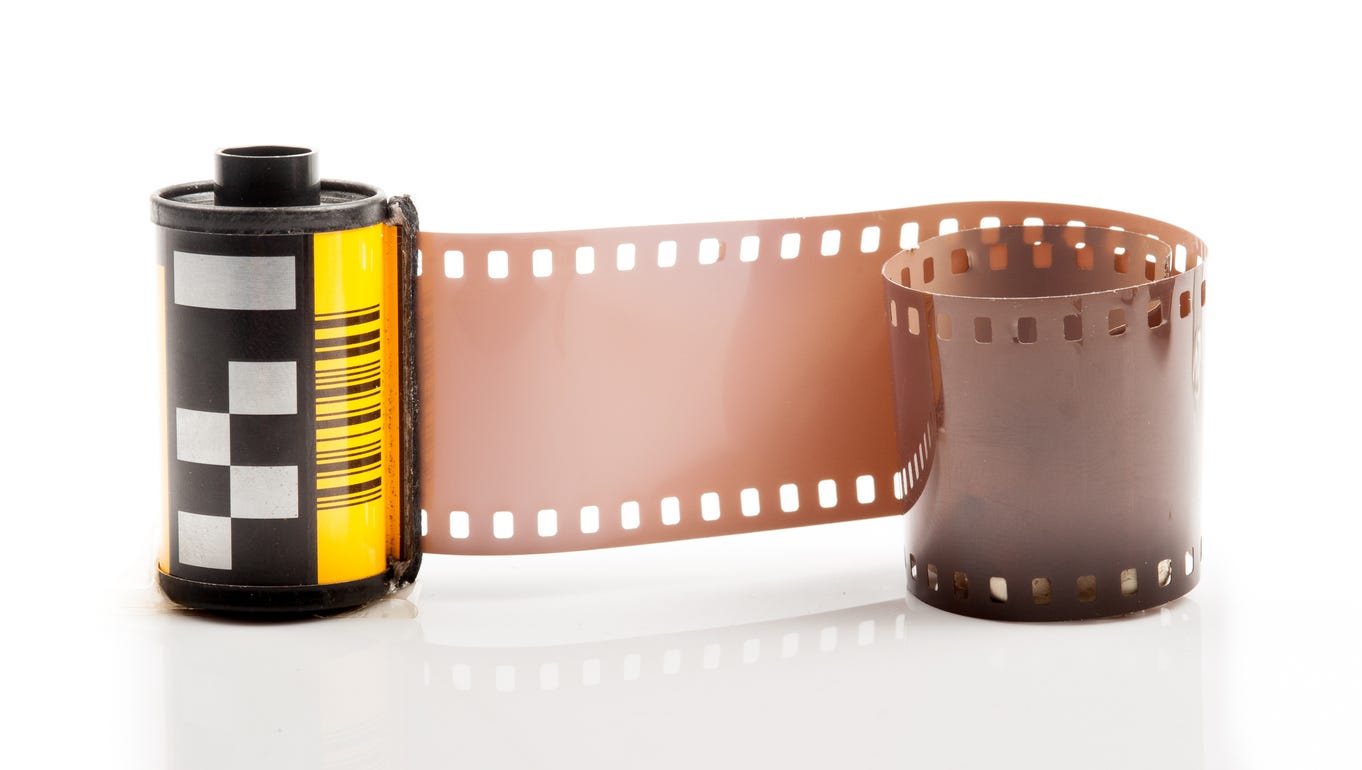
The leader kept fooling around with the buttons and levers on my camera. “If you destroy that film, we are going to have a major problem.”
“We already do,” he said before putting the camera back on the hood and stepping even closer to me.
Was he provoking me? I wondered.
“What are you doing here?” he repeated.
“Obviously, taking a photo. A real estate agent hired me to take a photo of that house,” I said, pointing toward the house, “so I did. It’s one of the things I do for a living.”
He stared at me for a moment before pivoting and walking over to another agent at another Suburban. “Stay right here. Don’t even think about moving,” he said before walking away.
In my few minutes of peace, my mind was processing. These aren’t cops. Maybe secret service? No. More like DSS. With all the embassies around here... No. The G7. That has to be what it is. Somehow, I’ve stumbled onto a house a bigwig is staying in.
As I was thinking, I watched the MIB who was in charge of running my car walk over to the leader. They talked for a few minutes in concert with the man who had left with both pieces of my identification.
No doubt, by now, they had learned something that I knew would keep me here a while longer.
Finally, the leader and one of his men walked back over to me and asked me to go sit on the curb under the shade tree. They had to check a few more things before deciding what to do.
“It’s my car, right?” I asked.
The leader stared at me.
I began, “Look, I’m guessing you are Diplomatic Security Services. And I’m guessing you learned that my car has temporary plates because I just bought it. And I’m guessing you learned who formerly owned the car.”
“What can you tell me?” he asked.
“Not much. You now know what I know. But with a name like Lengquist, I’m clearly not Russian,” I said with a crooked smile.
“Just go sit. We’ll be a few more minutes,” the leader commanded.
Something in the moment, or the way he gave his command, told me that this wasn’t going to escalate.
“Which house is your guy in?” I asked, poking the bear.
There was no answer. “Just go sit.”
Within fifteen minutes, I had my camera back and I was in my white Ford Taurus heading back to Rockville.
Writer’s Note
I’ve written before about the intersection where truth meets fiction. This was a true story. But I also wrote some fiction that is tied to this story: The Art of the Invisible Car. Fiction that was written from a real life experience.
The fact is that I did buy that white Ford Taurus from a Bethesda, Maryland Ford dealership. It is also true that white Ford Taurus had an ignominious previous owner.
So, I get why I was detained until the government men could figure out who I was and what I was doing. It just seemed like a time suck at the time.
Q: Has there ever been a time you’ve been detained by authorities?
A Chris Writes, LLC Publication
Not legal advice / not professional guidance / do not imitate tactics
Fictionalized/composite/altered details + no identification intended
© 2026 Chris Writes, LLC. All Rights Reserved.
“Taking pictures. That should be obvious,”…
pretty ballsy! 😂